


Polishing a vintage Rolex can make a tired case look bright again, but it is not a step you can take back. Each time a case is polished, a thin layer of metal goes with the scratches, and on an older Oyster case the shape of that metal is a large part of the watch’s character.
This guide covers what polishing does, what is at stake, when it makes sense and how to keep the decision in your hands. If your watch is due a vintage Rolex service, it is worth settling the question before you hand it over.
What Polishing Does to Metal
Polishing is abrasion. It removes a scratch by wearing down the metal around it until the groove is gone. In metalworking, polishing and buffing are finishing processes that use abrasives on a wheel or strop, working through finer grades until the surface reflects cleanly.
On a fine hairline, the loss is tiny. On a deep mark, the whole area has to come down to the bottom of it. Either way, it is permanent: metal that has been polished away cannot be put back. So the useful question about polishing a vintage Rolex is not only how it will look, but what it will have lost.
Two things raise the stakes. Gold is softer than steel, so it marks more easily and gives way faster under a wheel. And many older cases have been polished before, sometimes more than once over decades of servicing, leaving less metal than the case started with.
Polishing a domed acrylic crystal is a separate, often sensible job. When this guide talks about polishing a vintage Rolex, it means the metal case and bracelet.
Polishing a Vintage Rolex: What Is at Stake
An older Oyster case is judged by its shape as much as its condition. These are the places where polishing a vintage Rolex shows first, and the details many collectors check before anything else.
Lug shape and thickness
Seen from the side, unpolished lugs on many vintage references have a full, even thickness and a crisp outline. Repeated polishing thins them and rounds their tops, so the case looks slimmer and softer than it was designed to be. Collectors talk about “fat lugs” on an untouched case.
Sharp edges, bevels and chamfers
On many older Rolex sports models, a narrow polished bevel, or chamfer, runs along the top edge of each lug. Where a model had one, a heavy polish tends to round it away first. Sharp case edges and, on models that have them, crown guards soften in the same way, as do the ridges of a fluted bezel.
Brushed and polished finish lines
Many Oyster sports cases combine brushed, or satin, lug tops with polished sides, meeting at a clean line. A careless polish carries shine into the brushed areas or blurs that line. Careful refinishing treats each surface separately and keeps the boundaries where they were.
Engraved numbers between the lugs
On many older Oyster cases, the reference number is engraved between the lugs at 12 o’clock and the serial number at 6 o’clock, hidden under the bracelet ends. These engravings are fine, and polishing between the lugs can soften or erase them. This is where polishing a vintage Rolex can remove information as well as metal, so a careful refinisher leaves the area alone.
Bracelet and clasp
Bracelets wear in two ways: their surfaces scratch, and the joints between links wear, which is what makes an older bracelet stretch. Polishing deals only with the first. It can round link edges and soften the stamping on a clasp, and it does nothing for stretch, which many collectors accept on an original folded-link bracelet anyway. If a bracelet feels loose, bracelet re-pinning is a separate conversation.
Heavy polishing of the case can also open gaps where the end links meet it, because the case no longer matches the shape they were made to fit. And a freshly polished bracelet beside an untouched case can look out of place, so it is worth thinking about the watch as a whole.
Why Many Collectors Prefer an Unpolished Case
For many collectors, the case is one of the clearest records of how a watch has been treated. Full lugs, crisp bevels and sharp engravings suggest a watch that has been looked after rather than reworked. That is the main argument against polishing a vintage Rolex: whatever the case gains in brightness, it can never regain in shape.
The same reasoning runs through the rest of the watch, from replacement dials fitted during servicing, often called service dials, to luminous material that has aged with it. Our guide to tritium, Luminova and patina explains why many owners want aged lume left as it is.
None of this makes scratches desirable. It means that condition and originality are different things, and polishing improves the first at the expense of the second.
A Light Clean, a Careful Refinish or a Heavy Polish
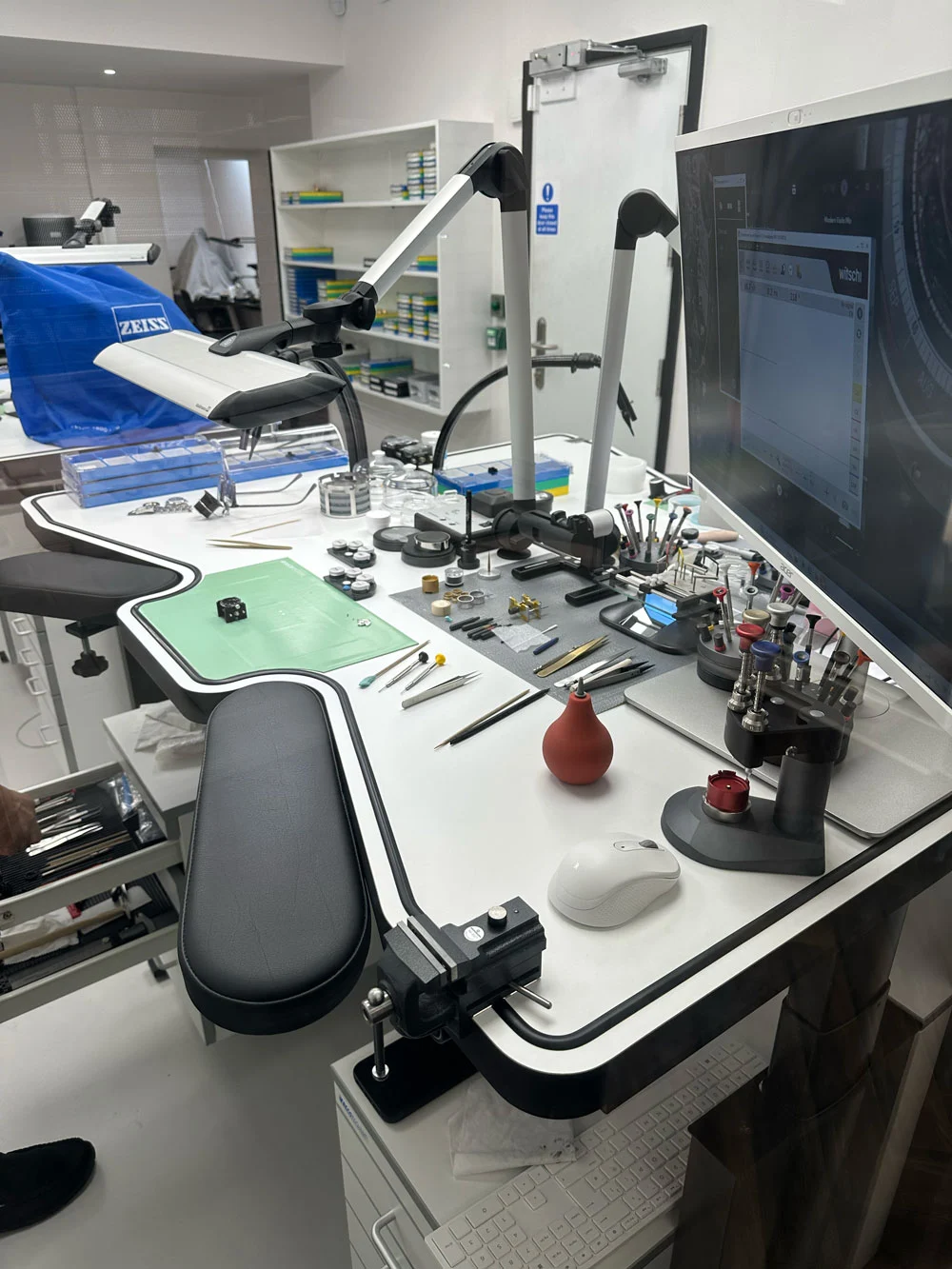
The word “polishing” covers very different jobs. When someone talks about polishing a vintage Rolex, ask which of these they mean.
- A light clean. Dirt, skin oils and old residue come off, and no metal is removed. Grime dulls a finish, so this alone often makes a clear difference.
- A careful refinish. As little metal as possible is removed. Hairlines are reduced, brushed surfaces are re-grained in their original direction, and edges, bevels and engravings are protected or left alone. Some marks stay, because removing them would change the case more than they do.
- A heavy polish. The aim is to remove every mark. It can look impressive at first, but it is how lugs thin, bevels disappear and engraved numbers fade. It is the version many collectors most want to avoid.
The gap between the second and third is mostly restraint. Two people with the same tools can return very different cases, and knowing what to leave is the real skill in polishing a vintage Rolex.
Cleaning Is Not Polishing
An ultrasonic clean is often mistaken for polishing, but it is a different process. The case is normally stripped first, removing the movement, dial, hands and anything else the bath could harm. The case and bracelet then sit in a cleaning fluid while high-frequency vibration lifts dirt from between links and under the lugs. Nothing is abrasive, and the metal is not reshaped.
The distinction matters both ways. An owner who asks for “a clean” may not expect a refinish, and one who refuses polishing may assume the watch will come back grubby. Neither has to happen. A thorough clean shows the true condition of the metal, and it can settle the question of polishing a vintage Rolex without a wheel touching the case.
Stripping a case, whether to clean or refinish it, disturbs its seals, so a pressure test after reassembly makes sense where the case allows it. Our guide to vintage Rolex water resistance explains what that test can and cannot tell you.
When Refinishing Is a Reasonable Choice
None of this means polishing a vintage Rolex is always wrong. There are sound reasons to choose a careful refinish.
- Deep damage. A gouge, burr or dent that catches on a cuff can bother you more than a little lost metal, though working on that area alone can be kinder than polishing the whole case.
- Daily wear. A watch you wear every day, as a companion rather than a collector’s piece, may simply be nicer to live with after a fresh finish.
- Personal preference. Some owners prefer a bright, even finish to honest wear, and that is a legitimate choice.
- Earlier polishing. If a case has already been polished heavily, a careful refinish can sometimes restore more consistent lines, although it cannot replace what has gone.
What these share is that the decision is made knowingly. Refinishing can make a watch look cared for while taking away some of what collectors look for, so decide which matters more to you before polishing a vintage Rolex, not after. Our refurbishment and polishing page covers the process in more detail.
How to Ask for No Polishing in Writing
A spoken request at the counter can get lost on the way to the bench. Some workshops refinish cases as part of a standard service, so polishing a vintage Rolex can happen without anyone meaning to ignore you. Writing it down removes the doubt.
- Put it in your first email or on the booking form: no polishing or refinishing of the case, bracelet or clasp.
- Say what you do want, such as a clean only, so the instruction reads as a plan rather than a refusal.
- Ask for it to appear in the quotation or estimate you approve, and check that it does.
- List anything else to be left alone, such as the dial, hands, bezel insert and crown.
- Photograph the case, lugs and clasp before you hand the watch over.
When you collect, compare the watch with your photographs before you leave. Questions are easier to raise there and then.
Seven Questions to Ask Before Polishing a Vintage Rolex
Whoever looks after your watch, these questions show how they think about originality.
- Is polishing part of your standard service, or done only on request?
- If you would recommend refinishing, which surfaces would you work on, and which would you leave?
- Will the lug shape, any bevels and the brushed and polished lines be kept?
- Will the area between the lugs, where the numbers are engraved, be left alone?
- Can the case and bracelet be cleaned without any polishing at all?
- Will my instructions be recorded in the quotation or estimate I approve?
- If there is deep damage, what are the options besides polishing it out, including leaving it?
Clear answers, ideally in writing, are a good sign of a careful workshop.
Polishing a Vintage Rolex: Common Questions
Is polishing a vintage Rolex ever a good idea?
Sometimes. For deep damage, daily wear or a simple preference for a fresh finish, a careful refinish can be a reasonable choice. If originality matters to you, start with a thorough clean, because a clean can always be followed by a polish, but never the other way round.
Can I polish a vintage Rolex at home?
It is best not to. Many polishing cloths and pastes contain a mild abrasive, and they can leave shiny patches on brushed surfaces or blur the lines between finishes. A soft, dry microfibre cloth is enough for everyday care; anything more, including polishing a vintage Rolex, belongs with a workshop that can take the watch apart first.
Can metal lost to polishing be put back?
The original metal cannot. Laser work, which adds new metal rather than removing it, is sometimes discussed for cases that have lost a lot of shape. Whether it suits a particular watch is a question for the assessment, and a rebuilt area is a reconstruction, which matters to many collectors.
How Alpha Group Approaches Polishing
Alpha Group is an independent watch servicing, repair and restoration workshop in Farringdon, London, just off Hatton Garden, and is not affiliated with Rolex. In our workshop, polishing a vintage Rolex happens only if you choose it, and the trade-off is explained before anything is agreed.
Start by telling us about the watch and any requirements about original parts, finishes, engravings or preserving collector value, including whether you want the case and bracelet left unpolished. After an assessment, we explain the proposed work and give you a quotation or an estimate, making clear which it is.
Refinishing may affect collector value, so it is discussed with you first. The scope of work is recorded in the quotation you approve, and work starts only once you approve it. To talk it through, book a consultation, or see our vintage Rolex service page for how the rest of an older watch is assessed.


