

Refurbishment & polishing
Watch refurbishment & polishing.
Considered cleaning and refinishing to renew your watch's appearance while respecting its shape and character.
“Thank you for bringing my watch back to life, it feels new again!”
Our Hatton Garden workshop
Restore the finish. Respect the detail.
Every case, bracelet and clasp is assessed before the appropriate treatment is recommended.
- Individual assessment of case and bracelet
- Careful dismantling where required
- Refinishing suited to the material and original surfaces
- Thorough cleaning and reassembly
- Inspection and appropriate pressure testing
Refurbishment & polishing
Talk to a watchmaker.
Tell us about your watch. We’ll email you with the next step.
Care without the guesswork.
Founder-led expertise
25 years of watchmaking experience, applied to the assessment of your watch.
Explore our workshopA clear next step
Discuss the proposed work and estimate before deciding how to proceed.
Make an enquiryFrom enquiry to workshop
Personal care. Clear next steps.
-
Your watch
Share the model, symptoms and any service history you know.
-
Your assessment
Understand the proposed work and estimate before deciding.
-
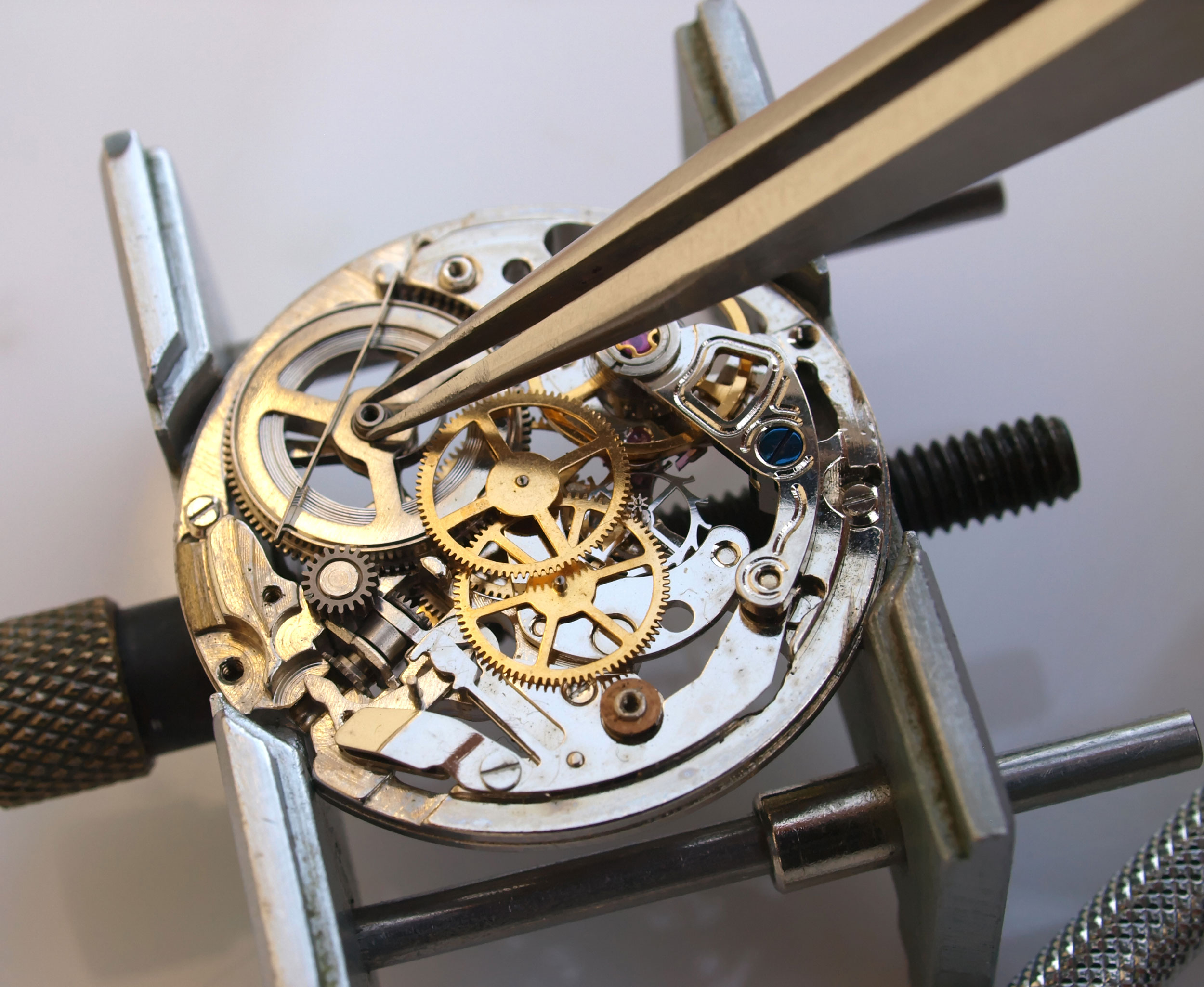
Care & final checks
Agreed work is followed by checks suited to your watch.
Before you
entrust it to us.
Not sure what your watch needs? Speak with our watchmakers about the next step.
Ask our watchmakersWhat will polishing cost?
Costs depend on the watch and work required. Following an assessment, the team explains the estimate so you can decide how to proceed.
How long will it take?
The condition, complexity and availability of parts affect timing. An estimated completion time is provided after inspection.
Can every scratch be removed?
Not always. Deeper marks may need a different approach, and removing them can change the case profile. The team explains what is appropriate after inspection.
What should I include in my enquiry?
Tell us which areas concern you: the case, bracelet, bezel or clasp. Mention any previous polishing and any original finishes you want to preserve.
Is my enquiry a confirmed booking?
Not yet. This form starts a conversation about your watch. Please wait for the team to confirm the next step and agree a time with you before treating it as an appointment.
Find the workshop.
Open Google MapsWatch refurbishment and polishing in Hatton Garden
Refurbishment and polishing can make a well-worn watch look cared for again, but it is not a cosmetic wash that can be repeated without cost. Every pass of a polishing wheel removes a little metal, so the best results come from knowing exactly what a case and bracelet can afford to lose. At Alpha Group, an independent workshop in Hatton Garden, London, the starting point is always the individual watch and what you want from it.
This guide explains what refurbishment and polishing involves in general watchmaking terms, where the real trade-offs lie, and how to choose between a light refresh, a fuller refinish or simply a thorough clean. If you already know what you would like done, you can book a consultation and bring the watch in for assessment.
Signs a watch may need refurbishment and polishing
Few watches need cosmetic work urgently. Wear builds slowly, and many owners only notice it when they compare their watch with a photograph of it new. Common reasons people ask about refurbishment and polishing include:
- Fine scratches and swirl marks across polished surfaces, especially the bezel, case flanks and centre bracelet links.
- Brushed surfaces that have turned patchy or shiny where the watch rubs against a desk or shirt cuff.
- Small dings on the lugs or case edge from doorframes, railings and car doors.
- A clasp that has lost its definition, with scuffing across the cover and any signed or engraved detail.
- Grime packed between bracelet links and around the case back, which can hide the true condition of the metal.
- Uneven finishing left by an earlier, heavier polish, such as rounded edges or a brushed grain that now runs in the wrong direction.
Not every one of these calls for metal to be removed. Sometimes a deep clean reveals that the finish is in better shape than it looked, and the honest advice is to leave it alone.
What watch refurbishment and polishing involves
In general watchmaking terms, refurbishment and polishing covers three separate jobs: cleaning, refinishing and reassembly. Cleaning removes dirt and old residue. Refinishing restores the surface texture, whether that is a mirror polish or a brushed grain. Reassembly puts the case and bracelet back together so that the watch closes properly and, where the design allows, can be pressure tested.
Before the case itself is refinished, it is normally taken apart. The movement, dial, hands and crystal need to be kept well away from polishing compounds, which are abrasive and can work their way into small gaps. Bracelets are usually separated from the case and often taken apart link by link, because surfaces hidden by a neighbouring link still need attention. Seals are disturbed whenever a case is opened, which is why a pressure test after reassembly makes sense for any watch that is meant to resist water.
Polished, brushed and satin finishes
Most modern cases combine more than one surface. A polished bevel might run along a brushed lug, or a bracelet might alternate mirror-polished centre links with satin outer links. Each finish is produced differently. Mirror polishing uses progressively finer abrasives until the surface reflects cleanly. Brushed and satin finishes are made by drawing an abrasive across the metal in one direction, so the direction and coarseness of the grain matter as much as the shine.
Good refinishing respects the boundaries between these surfaces. Where a brushed face meets a polished edge at a crisp line, that line is part of the original design. Blurring it, or carrying polish into an area that should be grained, is one of the most common signs of an overworked case.
Different metals behave differently
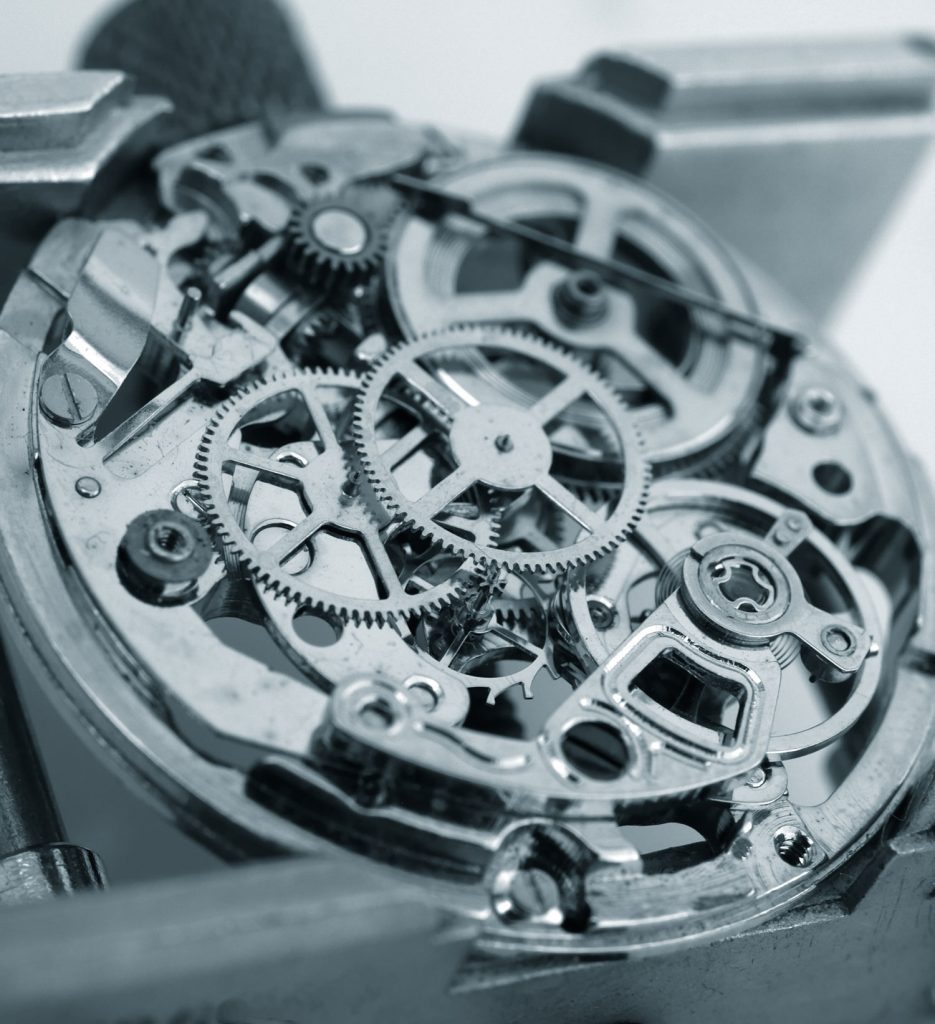
Stainless steel is hard-wearing and takes both brushed and polished finishes well. Yellow, white and rose gold are softer and pick up marks more readily, so they often look worn sooner and need a lighter hand. Platinum tends to displace rather than lose metal when it is scratched, giving it a soft, slightly matte look over time that some owners prefer to keep. Titanium and ceramic each have their own limits, and ceramic parts cannot be refinished in the same way as metal. That is why the material is confirmed before any refurbishment and polishing is recommended.
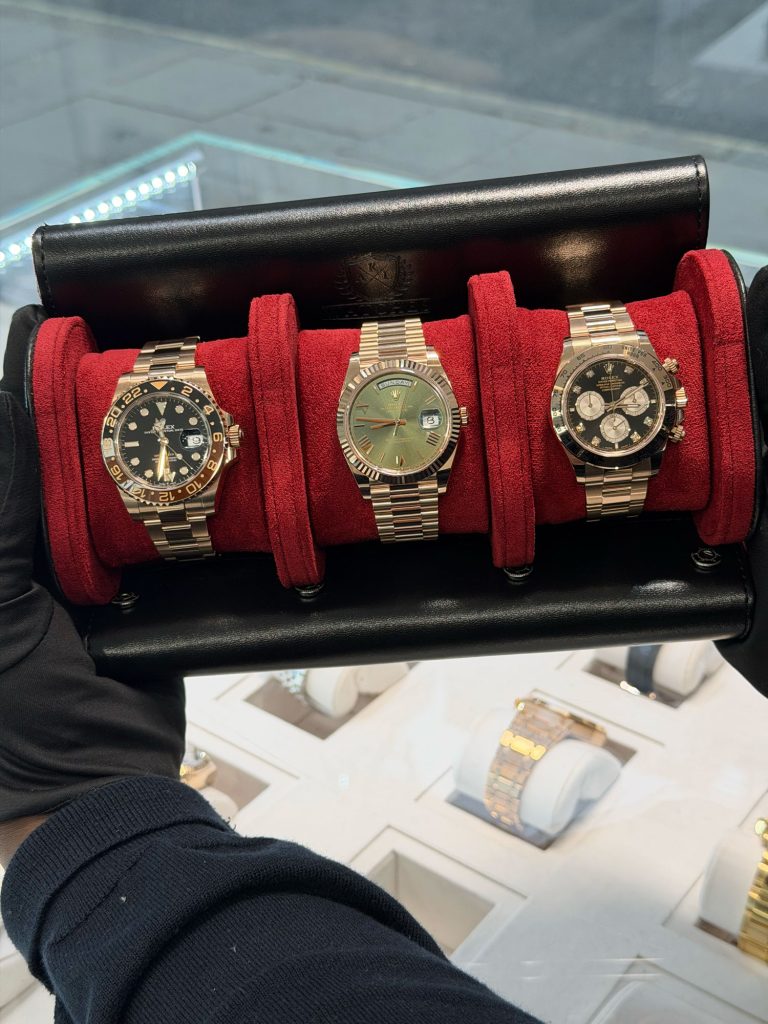
The honest trade-off: polishing removes metal
This is the part of refurbishment and polishing that matters most, and it is easy to skip in a sales conversation. Polishing works by abrasion. To make a scratch disappear, the surface around it is lowered until it sits level with the bottom of the scratch. On a shallow mark that loss is tiny. On a deep gouge it can be significant, and the metal does not come back.
Repeated over years, that loss shows in predictable places. Lugs become thinner and more rounded. Sharp bevels soften into curves. Case flanks lose their flat planes. Engravings, hallmarks and small signatures on the case or clasp become shallower. A bracelet that has been polished heavily can also look loose, because the links no longer fill out the gaps between them.
So the aim of careful refurbishment and polishing is not to remove every mark. It is to bring the watch back to a clean, consistent finish while keeping as much of the original shape as possible. On some watches that means accepting a few deeper marks, because removing them would alter the watch’s proportions.
Refurbishment and polishing versus collector value
For many collectors, an unpolished or lightly polished case is part of what makes a watch desirable. Sharp lugs, visible original bevels and crisp hallmarks are often read as evidence that the case has not been reworked. On a modern everyday watch this may matter much less, and a fresh finish may be exactly what you want.
There is no single right answer, which is why the choice should be yours, made with the facts in front of you. Some refinishing may affect collector value, and Alpha Group discusses this with you before any work is agreed. If you are unsure, the lighter option is usually the safer place to start, because more can be done later but polishing can never put metal back.
Where damage is too deep for polishing to address without changing the shape, laser repair is sometimes an alternative, because it adds metal rather than taking it away. Whether it suits a particular watch is something to confirm after inspection.
Six honest questions to ask before refurbishment and polishing
- What should the watch look like afterwards? Fresh and uniform, or clean but honestly worn?
- Has it been polished before? Previous work changes how much metal is left to work with, and it is not always obvious to an owner.
- Which details must not change? Bevels, engravings, hallmarks, a personal inscription or a brushed grain you particularly like.
- Does the whole watch need it? Sometimes the clasp or bracelet is the only area that really needs attention.
- Is the watch also due a service? Combining work can be sensible, but refurbishment and polishing on its own does nothing for the movement.
- Might I sell it one day? If so, talk about originality and collector value before any refinishing begins.
How refurbishment and polishing works at Alpha Group
Every enquiry starts with information. Tell us about the watch, the areas that concern you and any requirements around original finishes, engravings or collector value. If you know the watch has been polished before, mention it, because it shapes the advice.
Once the watch has been examined, you hear which surfaces we suggest refinishing, which we would leave, and why. That comes with a quotation or an estimate, and you are told plainly which of the two it is. The plan you sign off is written into the approved quotation, so everyone knows where the work stops, and no metal is touched before you approve it. You also receive an estimated completion time once the assessment is done, with word from us if anything material holds it up.
On the paperwork side, if a deposit is needed before work starts or parts are ordered, you get its amount and purpose in writing. The balance falls due when the refinishing is finished, ahead of collection or dispatch. Warranty terms for the job, including how long they last and exactly what they cover, appear on the approved quotation and again on your invoice or service record, on top of your statutory rights.
Two further points are worth knowing. Independent work may affect a manufacturer’s commercial warranty, so check yours if the watch is still covered. And where a pressure test is carried out after reassembly, it checks the watch at the time of testing; it does not guarantee permanent water resistance.
Refurbishment and polishing alongside other work
Refurbishment and polishing is often combined with other work at the same visit. If the movement is due attention, the servicing and repairs page explains what a full service covers. A scratched crystal is a separate job, because sapphire is far too hard to be polished like metal; see watch glass replacement. A bracelet that has stretched may need bracelet re-pinning rather than, or as well as, refinishing.
Caring for your watch after refurbishment and polishing
A freshly refinished watch will pick up marks again; that is simply what happens to metal that is worn. A few habits can slow it down and reduce how often the case needs attention.
- Take the watch off for gardening, DIY, the gym and anything involving tools or weights.
- Watch out for “desk diving”, where the clasp and bracelet rub along a desk or laptop edge as you type.
- Store it on its own or in a soft-lined box, not loose in a drawer with keys, coins or other watches.
- Wipe the case and bracelet with a soft, dry microfibre cloth to remove skin oils and grime.
- Before any contact with water, check the crown is pushed home or screwed down as the maker intends, and leave the crown and any pushers alone while the watch is wet, unless the manufacturer says otherwise.
- Avoid household polishing cloths and pastes on brushed surfaces. They can leave shiny patches that are hard to reverse.
Above all, resist the urge to polish every time a new scratch appears. Light marks are part of a watch that is worn and enjoyed, and saving refurbishment and polishing for when it is truly needed is the best way to preserve the case.
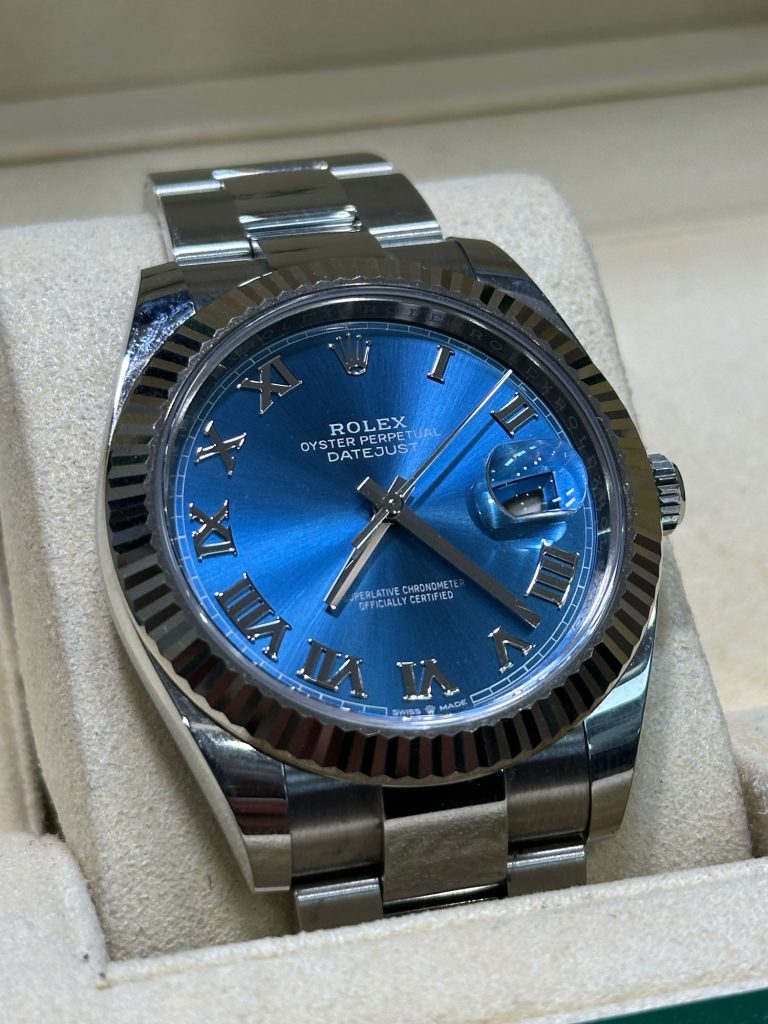
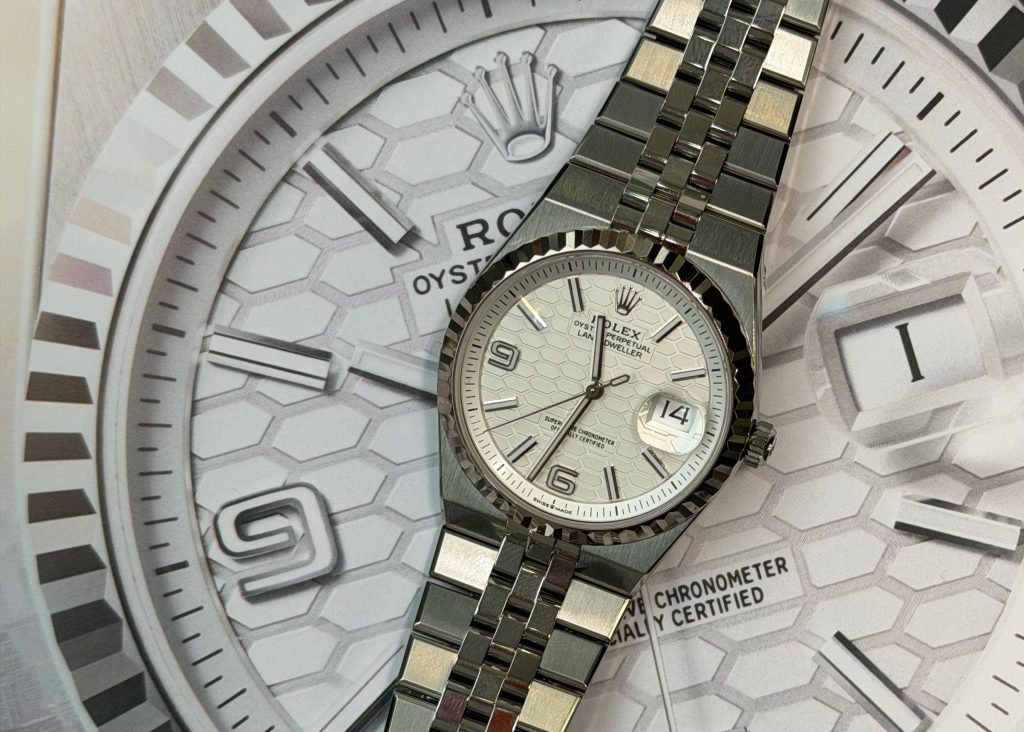
Visiting our Hatton Garden workshop
Our bench is on St Cross Street, a few minutes on foot from either Farringdon or Chancery Lane Underground station, in the middle of London’s jewellery quarter. The full address is 9 St Cross Street, Hatton Garden, London EC1N 8UB. We are there on weekdays from 10:30 until 17:30; on Saturdays and Sundays the workshop is shut.
The simplest way to begin is to get in touch by phone on 020 4531 5299, on WhatsApp at +44 7726 776776 or by email at contact@alphagroupwatchmaking.com. If you are considering refurbishment and polishing, photographs of the areas that concern you are helpful, though a proper assessment needs the watch in hand. If you post the watch, choose suitable packaging and a carrier whose insurance covers its value.
When the work is ready, bring your invoice or booking receipt to collect. Alpha Group sends a collection verification email and may ask for photo ID. Someone else can collect on your behalf only if you authorise them in advance by email.
Refurbishment and polishing FAQs
Will refurbishment and polishing affect my manufacturer’s warranty?
It may. Independent repair work can affect a manufacturer’s commercial warranty, so if your watch is still within one, check its terms before going ahead. Any repair warranty Alpha Group provides is stated on the approved quotation and sits alongside your statutory rights.
Can refurbishment and polishing cover just the bracelet or clasp?
Often, yes. Tell us which areas concern you, and the assessment will cover whether working on one part alone will look consistent with the rest. A freshly refinished bracelet next to a heavily worn case can look mismatched, so it is worth considering the watch as a whole.
Does the movement come out for refurbishment and polishing?
When the case itself is being refinished, it is standard watchmaking practice to remove the movement first, because polishing compounds and fine residue get everywhere. Lighter work on a detached bracelet may not need the case opened at all. The approach for your watch is explained at assessment.
Can a scratched crystal or ceramic bezel be polished?
Acrylic crystals, common on older watches, can often be polished to reduce light scratches. Sapphire crystals are much harder and are normally replaced rather than polished when they are damaged. Ceramic bezel inserts resist scratches well but cannot be refinished like metal, and a chipped insert generally needs replacing. These are assessed separately from the metal case.
Should I polish a watch before selling it?
Not automatically. Many buyers of collectable watches prefer a case that has not been polished, even if it shows wear, because its original shape and detail are easier to judge. For an everyday modern watch, a clean and light refresh may simply make it more pleasant to own. If a sale is on your mind, say so at assessment so the advice reflects it.
Is refurbishment and polishing the same as a service?
No. This work deals with the outside of the watch: the case, bracelet and clasp. A service deals with the movement inside. A limited repair is not a complete service, and the approved quotation records exactly what is included.
Can engravings and hallmarks be protected?
Tell us about any engraving, inscription or hallmark you want kept. This kind of detail sits close to the surface, so heavy polishing nearby can soften it. Knowing about it in advance means the plan can work around it, and areas with fine detail can be treated lightly or left alone.