

Servicing & repairs
Luxury watch servicing & repairs.
From routine maintenance to complex repairs, our watchmakers help restore your watch's accuracy and performance.
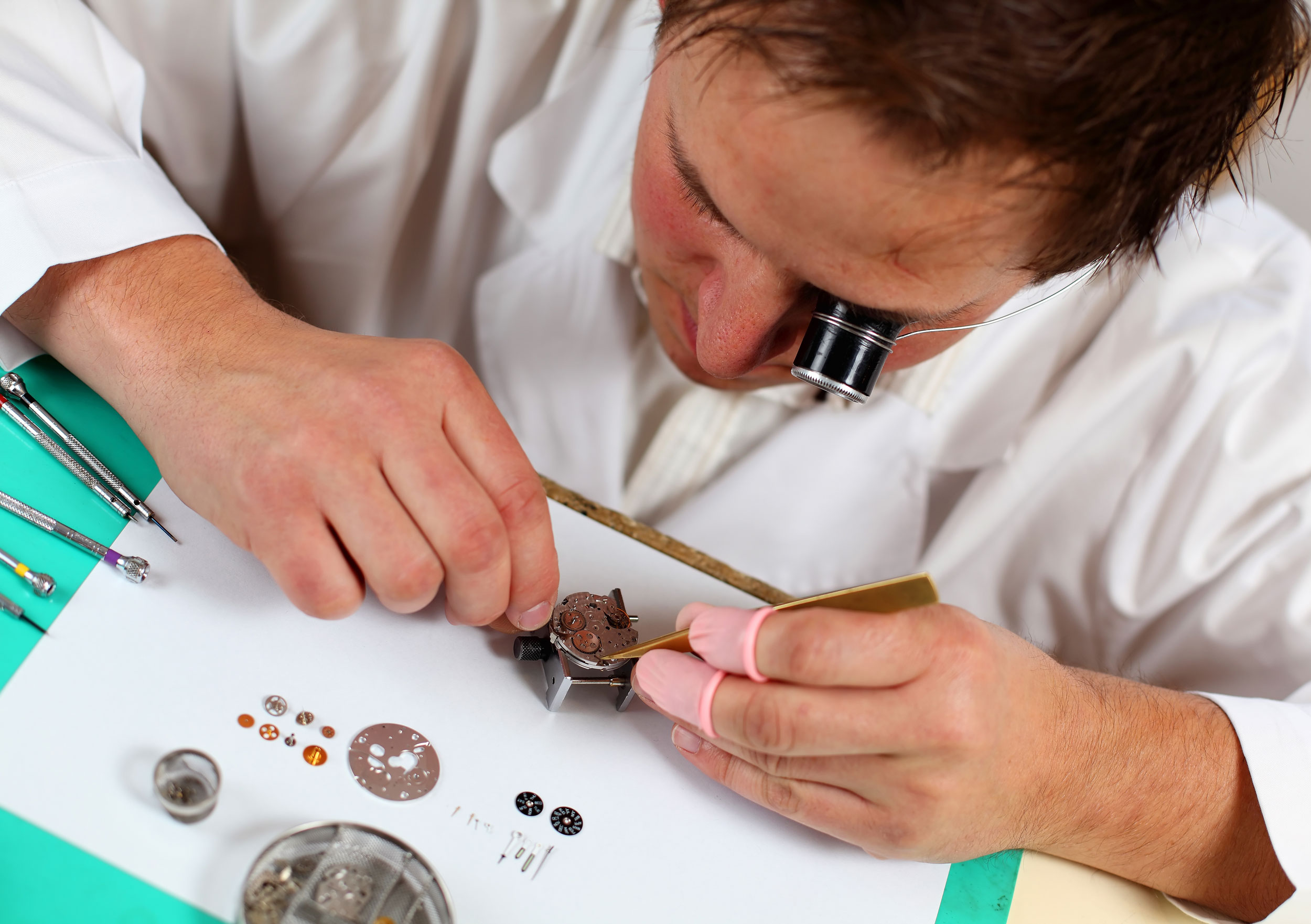
“Thank you for bringing my watch back to life, it feels new again!”
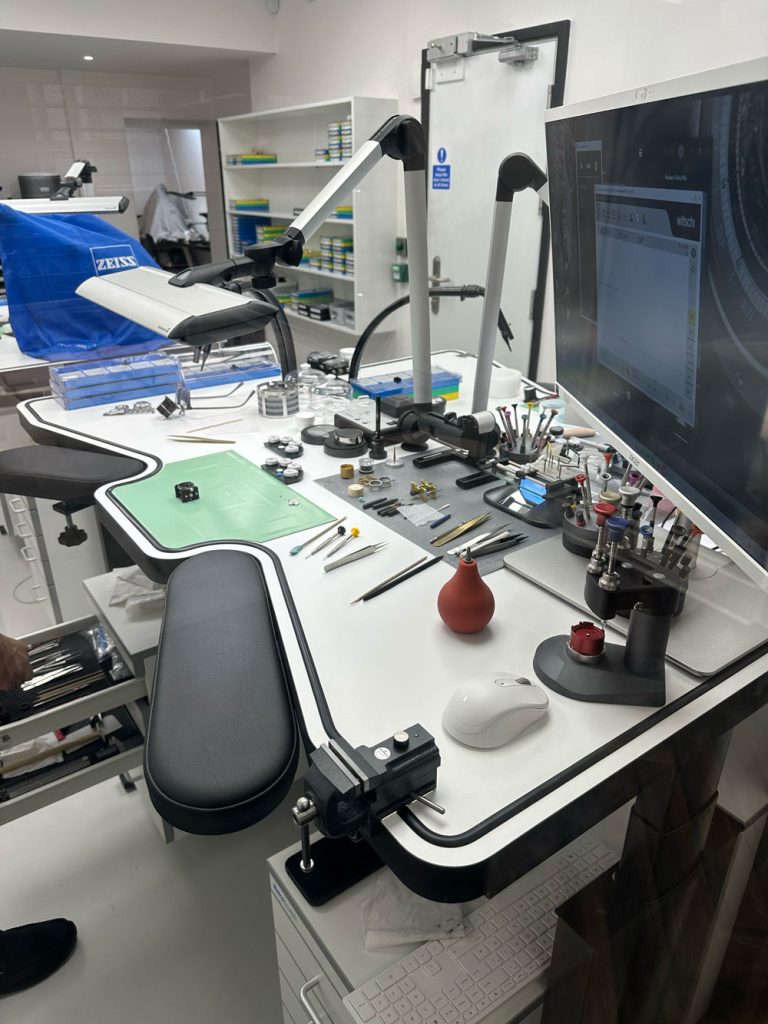
Our Hatton Garden workshop
The care behind every service.
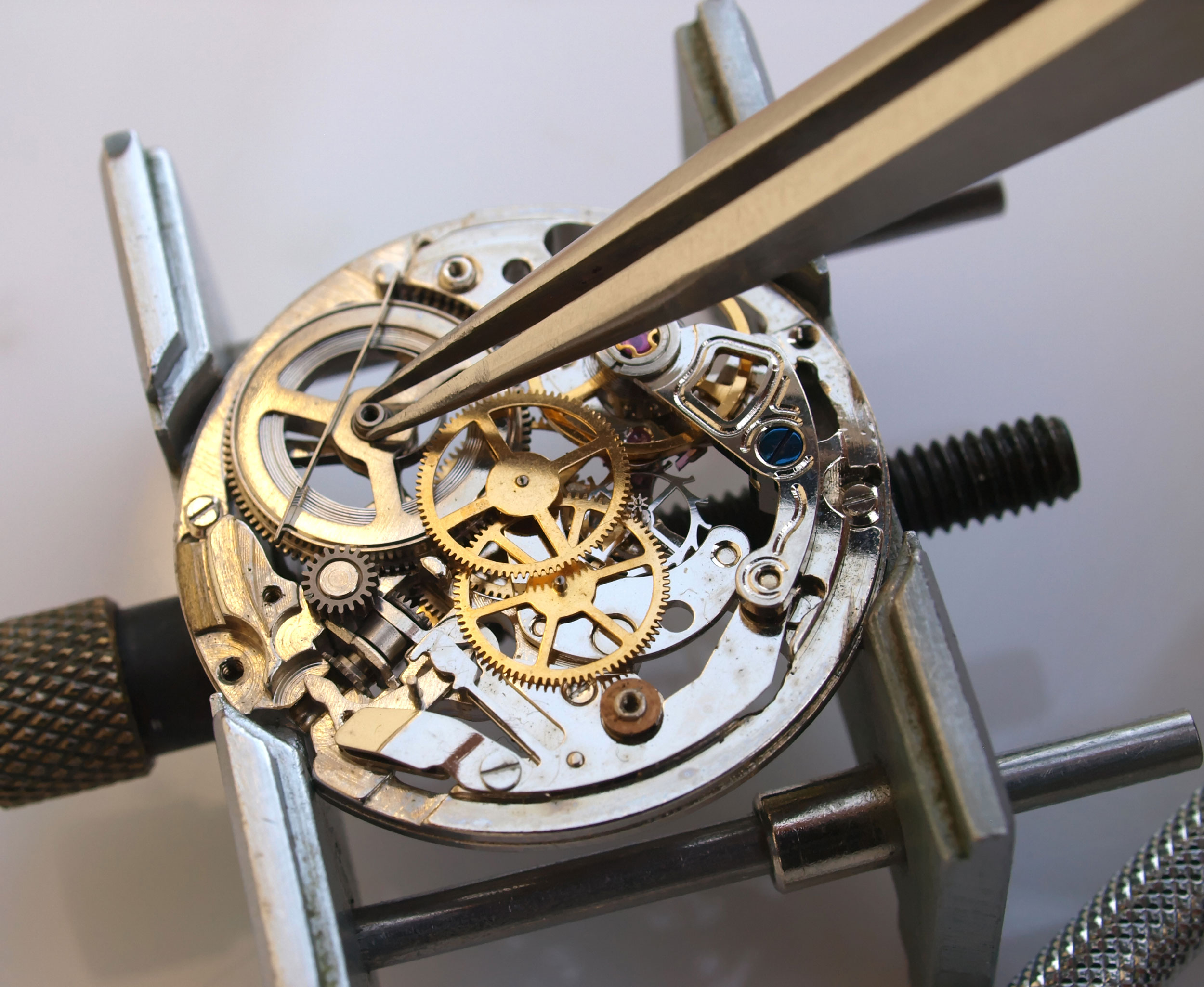
The exact work is tailored to your watch's condition and specification. A typical service includes:
- Movement inspection, dismantling and cleaning
- Lubrication, reassembly and regulation
- Case and bracelet cleaning
- Gasket checks and replacement as required
- Water-resistance and pressure testing where appropriate
- Mechanical performance testing
Servicing & repairs
Talk to a watchmaker.
Tell us about your watch. We’ll email you with the next step.
Care without the guesswork.
Founder-led expertise
25 years of watchmaking experience, applied to the assessment of your watch.
Explore our workshopA clear next step
Discuss the proposed work and estimate before deciding how to proceed.
Make an enquiryFrom enquiry to workshop
Personal care. Clear next steps.
-
Your watch
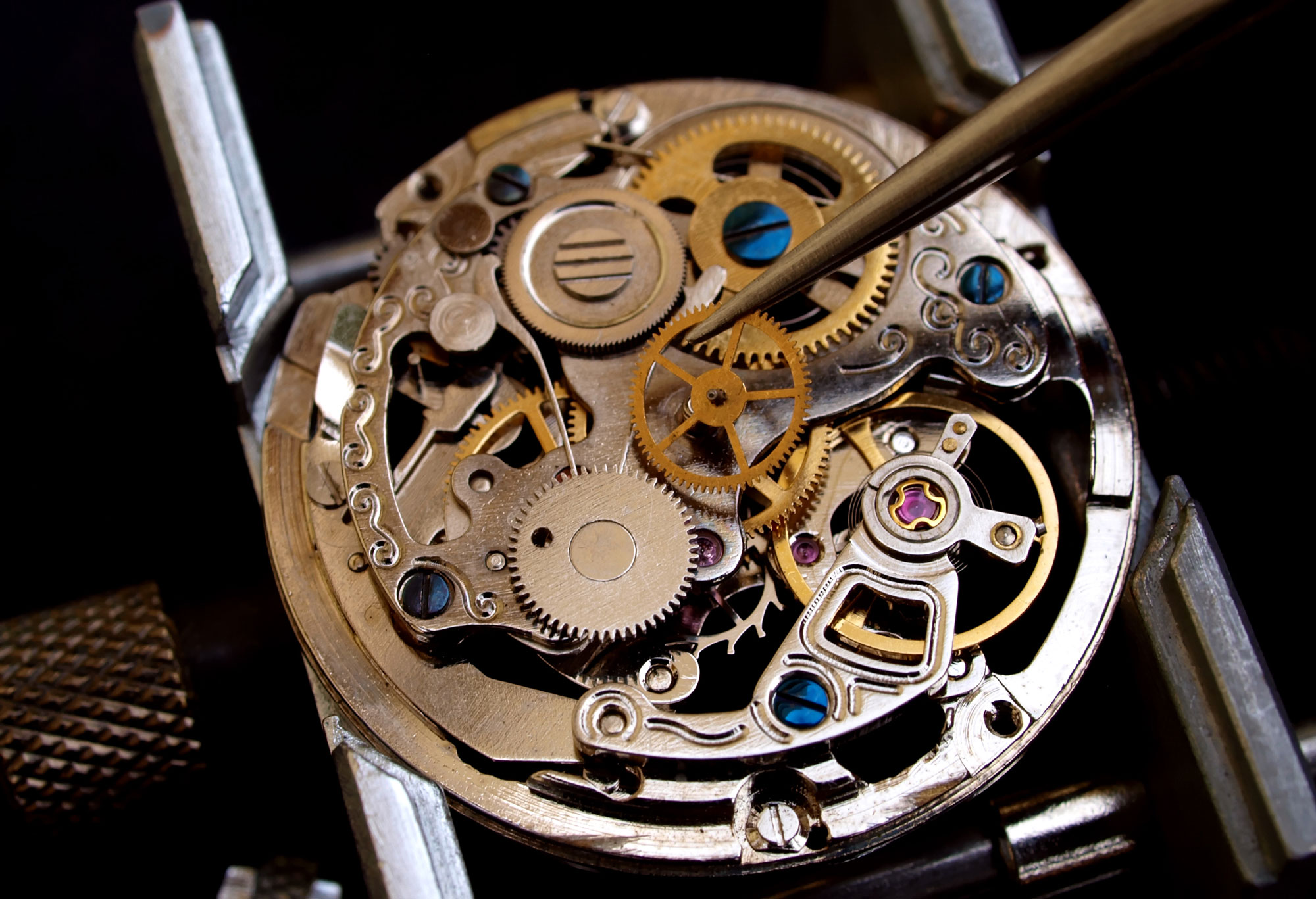
Share the model, symptoms and any service history you know.
-
Your assessment
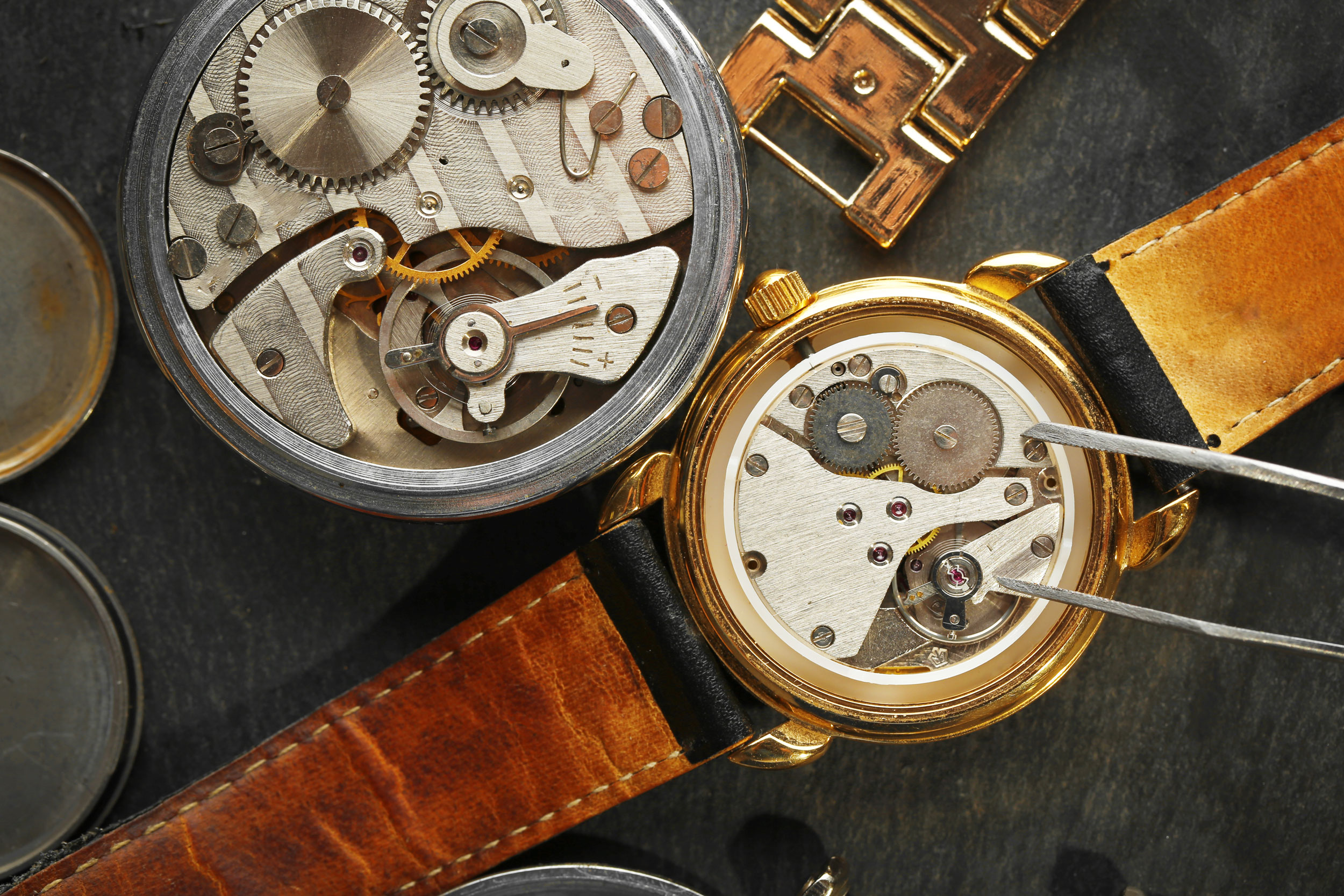
Understand the proposed work and estimate before deciding.
-
Care & final checks
Agreed work is followed by checks suited to your watch.
Before you
entrust it to us.
Not sure what your watch needs? Speak with our watchmakers about the next step.
Ask our watchmakersWhat will my service cost?
Costs depend on the watch and work required. Following an assessment, the team explains the estimate so you can decide how to proceed.
How long will it take?
The condition, complexity and availability of parts affect timing. An estimated completion time is provided after inspection.
What if additional work is needed?
The scope can change after inspection. Ask the team to explain any further work and its cost before you decide to proceed.
What should I include in my enquiry?
If you know them, include the brand, model, last service date and any changes in timekeeping. A short description is enough to start the conversation.
Is my enquiry a confirmed booking?
Not yet. This form starts a conversation about your watch. Please wait for the team to confirm the next step and agree a time with you before treating it as an appointment.
Find the workshop.
Open Google MapsServicing and Repairs at Our Hatton Garden Workshop
Watch servicing and repairs are related but different jobs, and knowing which one your watch needs makes every conversation easier. A service is planned maintenance that deals with gradual wear. A repair puts right a specific fault. Alpha Group is an independent workshop in Hatton Garden, London, carrying out servicing and repairs on mechanical, automatic and quartz watches.
Every watch starts with an assessment. We explain what we found, propose the work and give you a quotation or estimate to approve before anything begins. This page explains how that works, what a full service involves and which faults bring watches to our bench most often.
Servicing and Repairs: What Is the Difference?
A full service is a complete overhaul. The movement is dismantled, cleaned, lubricated, reassembled and regulated, and the case is resealed and tested. It deals with wear that builds up slowly, often before you notice anything wrong, and it is the closest thing a mechanical watch has to a fresh start.
A repair addresses one particular problem: a broken crown, a snapped winding stem, a cracked crystal or a date that refuses to change. Some repairs can be carried out on their own. Others only make sense alongside a full service, because the movement has to come apart anyway. A limited repair is not a complete service, and your quotation says clearly which one you are approving.
In practice, servicing and repairs often overlap. A watch that arrives for a single repair may turn out to need a service, and a routine service sometimes uncovers a worn part. The scope can change after inspection, and any change is explained, with its cost, before you decide whether to go ahead.
Signs Your Watch Needs Servicing and Repairs
Watches usually give some warning before a fault becomes serious. Look out for:
- Timekeeping that gains or loses noticeably, or changes from one day to the next.
- A mechanical watch that stops sooner than it used to when you take it off.
- On many quartz watches, a seconds hand that jumps several seconds at a time, which usually signals a low battery.
- A crown that wobbles, feels loose or has come away altogether.
- Winding that feels rough, or no resistance at all when you wind.
- A date or day display that sticks, or changes at the wrong time.
- Loose hands, or something rattling inside the case.
- Misting under the crystal, or a crystal that is chipped or cracked.
- A long gap since the last service, or no record of one.
Two of these need prompt attention: moisture and rattles. Water inside the case can corrode parts quickly, and a loose component can damage others as the watch runs, so stop wearing it and bring it in. For anything less urgent, a watch health check is a sensible way to find out where your watch stands before committing to servicing and repairs.
Watch Servicing and Repairs: The Full Service in 9 Steps
The exact work depends on the watch, but a full service on a mechanical watch generally follows these stages, which are standard watchmaking practice:
- Inspection and timing. The watch is checked on a timing machine for rate, amplitude and beat error in different positions, and the case, crystal, crown and bracelet are looked over. The findings form the basis of your quotation.
- Opening up. The case is opened and the movement removed. The hands and dial come off with care, protecting the printing and any luminous material.
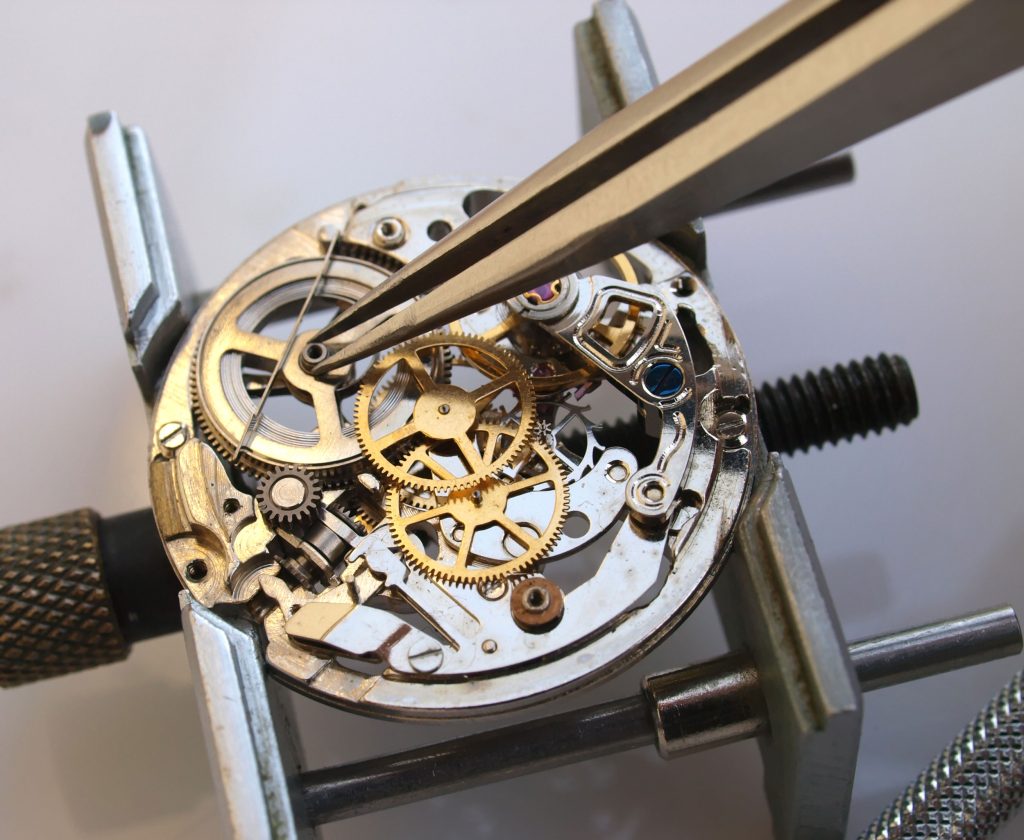
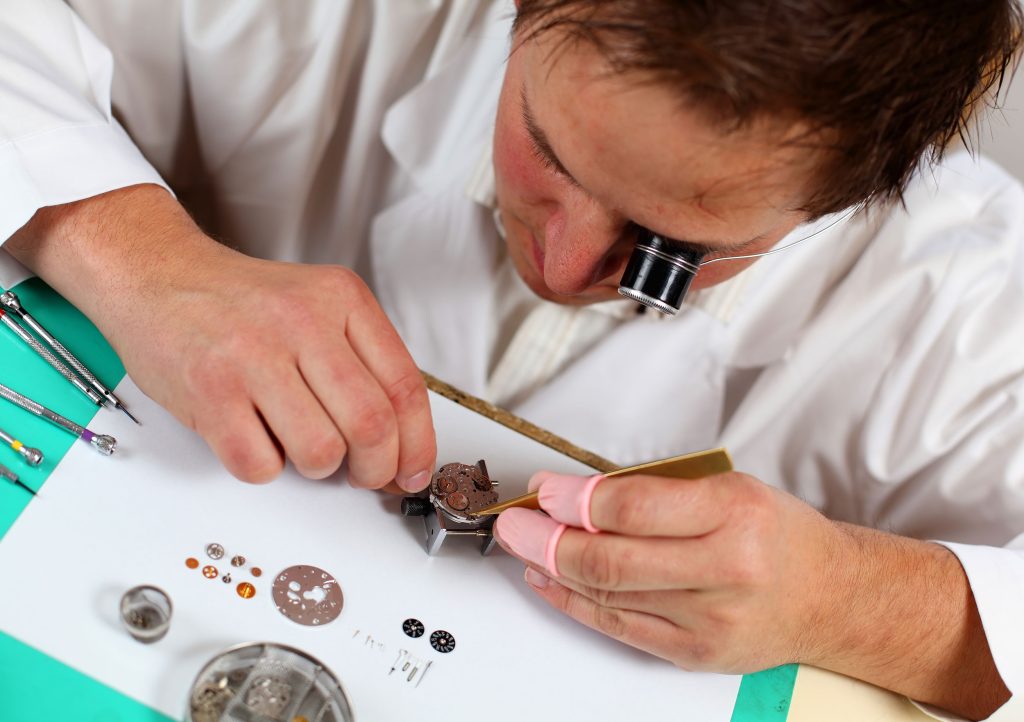
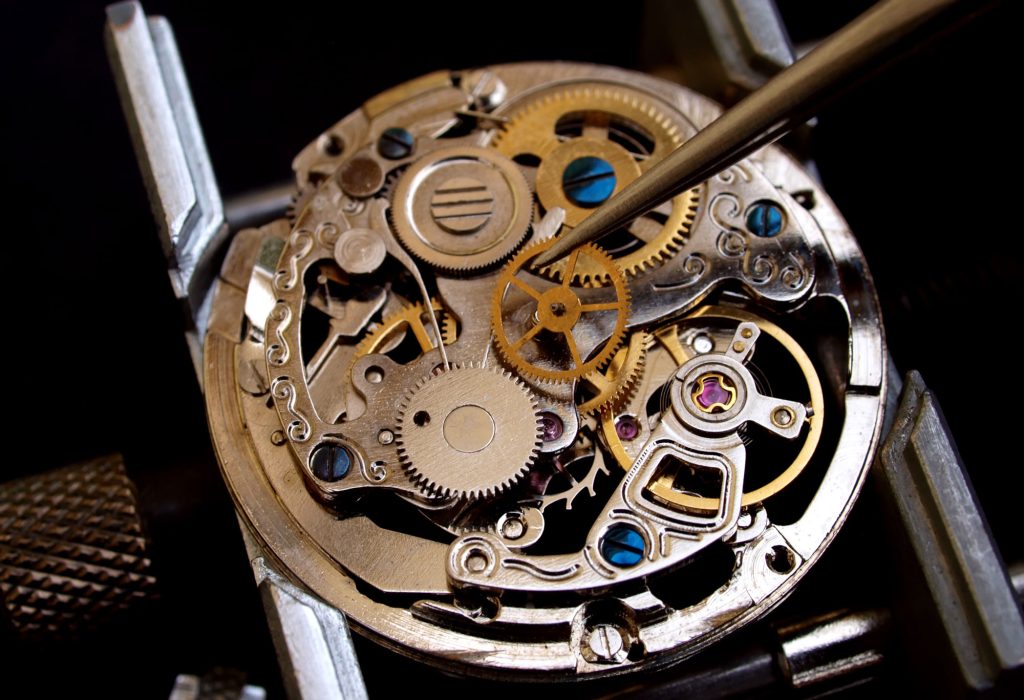
- Dismantling. The movement is taken apart, from the mainspring barrel and gear train to the escapement and balance, and each part is inspected under magnification for wear or damage.
- Cleaning. Movement parts are cleaned in a watch cleaning machine with specialist solutions, then dried. The case and bracelet are cleaned separately.
- Lubrication. Different lubricants do different jobs, from light oils for the balance jewels to greases for the barrel and winding parts, each applied in tiny, measured amounts.
- Reassembly. The movement is rebuilt and the winding and hand-setting functions checked as each stage goes together.
- Regulation. The watch is adjusted on the timing machine across several positions until it runs consistently.
- Gaskets and pressure testing. Gaskets are checked and replaced as required and, where appropriate, the cased watch goes into the pressure tester. The result applies to the moment of testing; the test pressure may not match the original rating, and no test guarantees permanent water resistance.
- Final testing. The watch goes through mechanical performance testing, with timekeeping, winding and every function checked before it is ready.
Quartz watches follow a different path, covered below, and repairs are scoped to the fault. Whatever the job, servicing and repairs only go ahead once you have approved the quotation.
Common Repairs We Assess
Most requests for servicing and repairs start with one of a handful of familiar faults. Each is assessed before any work is proposed.
Crowns, stems and winding
The crown is the part of a watch you handle most, so it wears. Damaged crowns, bent or broken stems and worn winding parts are common, especially on watches that are wound or set daily. A screw-down crown that no longer seats properly also weakens water resistance, so it is worth dealing with promptly.
Date and calendar faults
A date that sticks, half-changes or jumps two days at once can point to wear or damage in the calendar works. A common cause is setting the date while the mechanism is already engaged, which is why many manufacturers advise against changing it in the hours around midnight.
Water and moisture
Condensation under the crystal means water or humid air has got in, often through an aged gasket, a damaged crystal or a crown that was left open. The sooner the watch is opened and dried, the less chance corrosion has to take hold.
Magnetisation
A watch that suddenly runs very fast may have been magnetised by a speaker, laptop, phone case or magnetic clasp. It is a common fault that is checked during an assessment. Our article on the top causes of watch magnetisation explains how to avoid it.
Crystals, bracelets and batteries
A chipped or cracked crystal can let moisture in, so watch glass replacement is often the first job. Stretched bracelets can be tightened by re-pinning, and quartz watches need their batteries replaced before a dead cell has the chance to leak.
Mechanical, Automatic and Quartz Watches
The kind of movement shapes the servicing and repairs a watch needs.
Manual-wind watches are wound through the crown, so the winding stem, crown and keyless works take daily wear. Overwinding is a myth for most manual watches, since the mainspring simply reaches full wind, but forcing the crown beyond that point can damage the winding parts.
Automatic watches add a rotor and a winding system that turns your wrist movement into stored energy. That system has extra wheels and bearings, and a worn rotor bearing or winding wheel is a frequent reason an automatic stops overnight.
Quartz watches are powered by a battery and regulated by a quartz crystal. They need far less mechanical attention, but their seals still age, and a battery left in a stopped watch can leak and damage the movement. Our luxury watch battery replacement page explains how quartz watches are looked after.
What Shapes the Scope of Servicing and Repairs
No two quotations for servicing and repairs look quite the same, because several factors change what a watch needs:
- Condition. A watch that has been worn hard, knocked or exposed to water usually needs more than one that has been kept carefully.
- Complications. Chronographs, calendars and other added functions bring extra parts to clean, lubricate and adjust.
- History. Earlier repairs, replaced parts or long gaps between services can all show up once the movement is opened.
- Your priorities. Whether you want original parts kept, finishes left alone or the case refreshed changes the work proposed.
- Parts. The availability of parts can affect both the work and its timing, which is why an estimated completion time follows the assessment.
All of this is explained when the quotation is prepared, so the servicing and repairs you approve match what your watch needs.
Servicing and Repairs for Rolex, Audemars Piguet and Patek Philippe
Many owners ask about servicing and repairs for specific brands. We have dedicated pages explaining the options for Rolex servicing in London, Audemars Piguet servicing in London and Patek Philippe servicing in London, including how an independent service compares with the manufacturer’s own.
Alpha Group is independent and is not affiliated with or authorised by any watch brand. Independent repair work may affect a manufacturer’s commercial warranty, so check with the maker first while your watch is still under its warranty. If a manufacturer requires an exchange part to be surrendered, that is explained to you before the work is approved.
Original Parts, Refinishing and Collector Value
Servicing and repairs can be carried out with very different priorities. Some owners want a watch that looks and runs like new; others want it to keep every mark of its history. Let us know from the outset if original parts, existing finishes or engravings matter to you, or if you want to protect collector value. Refinishing and replacement parts can both affect collector value, which is why they are talked through first and only go ahead with your approval. Polishing, for example, removes metal from the case, so whether to polish is always your choice rather than an automatic part of a service.
How Servicing and Repairs Work at Alpha Group
From the first message to collection, our servicing and repairs follow a clear, written process:
- Tell us about the watch. Share the brand and model if you know them, what you have noticed and anything you care about, such as original parts or finishes. You can book a consultation to start.
- Assessment and quotation. Once we have examined the watch, we set out the work it needs and give you either a quotation or an estimate, labelled clearly as one or the other.
- Approval. Nothing begins until you say yes, and the agreed scope is written into the approved quotation.
- Deposit, where needed. For some jobs we ask for a deposit before ordering parts or starting work, and confirm in writing how much it is and what it is for.
- Timing. An estimated completion time follows the assessment, and you will be told of any material delay.
- Completion and payment. The invoice is settled when the work is finished, before the watch leaves us by hand or by post.
- Collection. Bring the invoice or booking receipt with you. A collection verification email comes first, and we may ask to see photo ID. To send someone in your place, authorise them by email beforehand.
Warranty terms are part of the paperwork, not small print. Whether a repair warranty applies, how long it runs and what it covers are all stated on the approved quotation, then confirmed on the invoice or service record. If a covered defect in workmanship or parts appears within that period, it is put right free of charge. Accidental damage is outside it, as is water damage from misuse or from care instructions not being followed, and it adds to your statutory rights rather than replacing them.
Sending Your Watch for Servicing and Repairs
If you can’t visit, you can send your watch to us. Choose suitable packaging and a carrier whose insurance covers its value, and include a note with your contact details and a short description of the problem. Charges and insurance for return dispatch are confirmed with you before the watch is sent back. Once it is ready, you are asked to collect it, or arrange return delivery, within 30 days of being told.
Looking After Your Watch Between Services
Good habits make servicing and repairs less frequent and less extensive:
- Close the crown fully, screwing it down if your watch is designed that way, and don’t use the crown or pushers underwater unless the manufacturer says you can.
- Avoid setting the date in the hours around midnight.
- Take the watch off for impact sports, heavy DIY and anything that involves strong vibration.
- Keep it away from magnets, including speakers, tablet covers and magnetic bag clasps.
- Have the water resistance checked from time to time if you wear the watch in water, since a pressure test only reflects the day it was carried out.
- Replace a quartz battery promptly once the watch stops or starts to signal a low battery.
Visiting Our Hatton Garden Workshop
Alpha Group is at 9 St Cross Street, Hatton Garden, London EC1N 8UB. Hatton Garden is London’s jewellery quarter and the centre of the UK diamond trade, and Farringdon and Chancery Lane stations are a short walk away. Kings & Queens Watches, our sister business and an independent pre-owned luxury watch dealer, works from the same building.
The workshop is open Monday to Friday, 10:30 to 17:30, and closed at weekends. Call 020 4531 5299, message us on WhatsApp at +44 7726 776776 or email contact@alphagroupwatchmaking.com to talk about servicing and repairs for your watch. If you are not sure whether it needs servicing and repairs or simply a check, say so when you get in touch; a health check may be the better place to start.
Servicing and Repairs FAQs
How often should a watch be serviced?
It depends on the manufacturer and the watch. Rolex, for instance, states a recommended interval of approximately 10 years between services for its modern watches, while other makers publish their own guidance. Condition matters as much as the calendar, so a watch showing the signs above should be checked sooner.
Is it worth servicing an older watch?
That depends on what the watch means to you and on its condition. The assessment explains what the watch needs and what the options are, so you can decide with the full picture in front of you.
Can you repair a watch that has stopped completely?
A watch that has stopped can often be assessed in the same way as one that still runs. The assessment identifies the cause and the work required before any decision is made.
Do I need a full service or just a repair?
The assessment answers that. A limited repair fixes a specific fault but is not a complete service, and the quotation states which one is being proposed.
Will my watch be water resistant afterwards?
Pressure testing tells you how the watch performed on the day of the test, and the pressure used may differ from the original rating. It can’t guarantee permanent water resistance, so keep crowns closed and have the seals checked periodically.
What should I do if water gets inside my watch?
Stop wearing it, keep the crown closed and don’t try to open the case or dry it with heat. Bring it in for servicing and repairs as soon as you can, because the longer moisture stays inside, the more chance corrosion has to spread.
Do you work on vintage watches?
Older watches are assessed individually, with particular attention to original parts and finishes. Where a watch needs more than servicing and repairs, restoration is discussed as a separate piece of work, with its own quotation.
Can I cancel after booking?
Consumers booking online, by phone or off-premises generally have 14 days to cancel a qualifying service contract.